Introduction
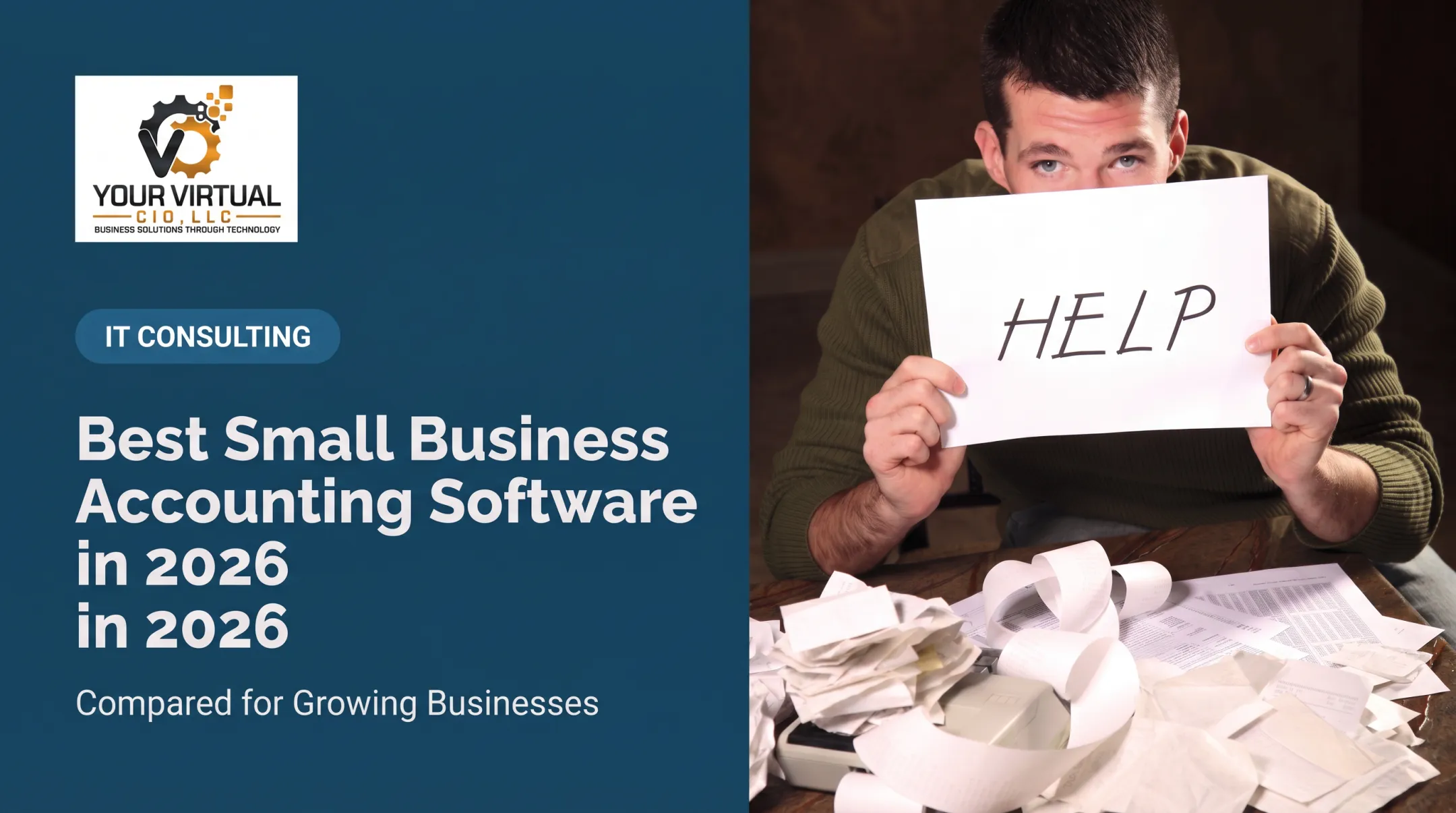
Spreadsheets work until they don't. Invoices live in one tool, card payments in another, and the bank balance tells you something different from the books. By the time you reconcile, the numbers are weeks old.
Cloud accounting software puts invoicing, expenses, bank reconciliation, reporting, and accountant access in one browser-based system, with no local servers to maintain.
This guide compares five platforms for U.S. small businesses: QuickBooks Online, Xero, FreshBooks, Zoho Books, and Wave. We look past the monthly price to workflow fit, integrations, security, scalability, and setup effort. Pricing shown is as of November 9, 2026. Confirm current terms before you buy.
Key Takeaways
- Cloud accounting stores financial data online, accessible by browser or mobile app.
- Each platform fits a different mix of business size, service needs, and accounting depth.
- Compare seats, client caps, payment fees, payroll, and migration effort, not just subscriptions.
- Pick the system that fits how you operate today and leaves room to grow.
Overview of Cloud Accounting Software in the U.S. Small Business Market
What cloud accounting is
Cloud accounting software is an internet-hosted application that stores financial records remotely. Authorized users reach shared data through a browser or app. NIST describes cloud computing as on-demand network access to shared computing resources that need minimal management effort.
Compared with desktop software, you get:
- Automatic updates
- Centralized data
- Remote access and multi-user collaboration
- Bank feeds and app integrations
- Provider-managed infrastructure
Software versus an accounting information system
An accounting information system is broader than the software. OpenStax describes it as the processes that collect, record, organize, and summarize transactions into financial statements and reports. It includes people, controls, data, and technology. The software is one component.
Every business needs a general ledger and accounts payable. Any business that invoices customers for later payment also needs accounts receivable, tightly integrated with the ledger.

Benefits and controls
Key benefits include:
- Current cash-flow visibility
- Simpler invoice and expense handling
- Easier collaboration with your accountant
- Less manual data entry
Cloud access does not replace controls. The NIST Small Business Quick-Start Guide recommends multi-factor authentication, restricting sensitive data to those who need it, monitoring logs, and testing backups. In practice:
- Set role-based permissions
- Review audit logs where offered
- Confirm you can export your data
- Check vendor reliability
Judge each product below by use case, not popularity.
Best Cloud Accounting Software for U.S. Small Businesses
This use-case comparison covers established platforms on core accounting, ease of use, pricing, integrations, security, support, and room to grow.
QuickBooks Online
QuickBooks Online is a broad platform covering invoicing, expense tracking, bank connections, reporting, and optional payroll. It suits businesses that want a familiar ecosystem and wide app connectivity, with over 800 integrations including Shopify, PayPal, and Square.
Watch for cost and complexity. PCMag rated it 4.5 (Outstanding) but called it expensive, with a crowded interface.
| Area | Details |
|---|---|
| Pricing | Free $0; Simple Start $38; Essentials $85; Plus $140; Advanced $340 per month. Paid plans show 50% off for 3 months; 30-day trial. |
| Users | Paid plans include 1/3/5/25 users plus 2/2/2/3 accountants. Free: 1 user, no accountant access. |
| Features | Inventory on Plus and up; project profitability on Plus and up; time tracking on Essentials and up. |
| Payments and payroll | Invoice cards 2.99%; ACH 1%. Payroll bundle with Simple Start $88/month plus $7 per employee. |
| Controls | User-level permissions on Essentials and Plus; custom roles and point-in-time restore on Advanced. |
Xero
Xero fits businesses that value collaboration, app connectivity, and room to expand. It has no per-user license fees and offers 1,000+ apps. NerdWallet praised its clean layout and multiuser collaboration.
The trade-offs: the entry plan caps invoices, and there is no inbound phone or live chat support.
| Area | Details |
|---|---|
| Pricing | Early $27; Growing $59; Established $97 per month. New-customer offer 80% off for 3 months; 30-day trial. |
| Limits | Early: 20 invoices and 5 bills per month. Partner-app transactions can count toward the invoice limit. |
| Features | Bank feeds and reconciliation on all plans; multicurrency and project tracking on Established. |
| Payments and payroll | Stripe cards 2.9% + $0.30; ACH 1% capped at $9. Payroll $36/month plus $6 per person. |
| Security | Encryption, MFA, and independently audited SOC 2 reports; 24/7 online support. |
FreshBooks
FreshBooks targets freelancers, consultants, agencies, and service businesses. It handles estimates, recurring invoices, time tracking, and a client portal without accounting jargon. NerdWallet highlights its project budgets and time tracking.
Limits show up as you grow. Lite lacks reconciliation, and client caps apply.
| Area | Details |
|---|---|
| Pricing | Lite $23; Plus $43; Premium $70; Select custom. 80% off for 4 months; 30-day trial, no card. |
| Limits | Billable clients 5/50/unlimited/unlimited. Extra team members $11/month each. |
| Features | Reconciliation and receipt scanning on Plus and up; project profitability on Premium and up. |
| Payments and payroll | Cards 2.9% + $0.30 (3.5% for Amex and commercial); ACH 1%. Payroll $40/month plus $6 per user. |
| Controls | Accountant access on Plus and up; 2FA required for email logins; phone and email support. |
Zoho Books
Zoho Books suits budget-conscious businesses that want automation and a link to Zoho's wider business apps, such as Zoho CRM. PCMag rated it 4.0 (Excellent), praising deep, flexible tools but warning that complexity can overwhelm beginners.
| Area | Details |
|---|---|
| Pricing | Free $0; Standard $20; Professional $50; Premium $70; Elite $150; Ultimate $275 per month. Annual billing lowers each. 14-day trial. |
| Free eligibility | Annual revenue must not exceed $50K; 1,000 invoices and 1,000 expenses per year. |
| Features | Bank feeds from Standard; stock tracking and projects from Professional; multicurrency from Professional. |
| Payments and payroll | Cards 2.90% + $0.30; ACH 0.8% capped at $5. Payroll from $39 plus $6 per employee. |
| Security | MFA supported; SOC 2 Type 2 scope across Zoho's cloud services. |
Wave
Wave fits freelancers and very small businesses that want basic bookkeeping, invoicing, and receipts at a low software cost. Starter is free with unlimited invoices, estimates, and bills. PCMag rated it 4.0 (Excellent) but noted no native inventory, time tracking, or projects.
Free does not mean automated. Bank connections and extra collaborators require Pro.
| Area | Details |
|---|---|
| Pricing | Starter $0; Pro $19/month or $190/year. No Pro free trial. |
| Payments | Starter cards 2.9% + $0.60; Amex 3.4% + $0.60; ACH 1%, $1 minimum. |
| Payroll | $40/month plus $6 per active employee and $6 per contractor paid; available in all 50 states. |
| Controls | Pro roles (Admin, Editor, Viewer) are not customizable; SMS or authenticator 2FA. |

How We Chose the Best Cloud Accounting Software
We focused on real-world usability, not brand recognition, promotional pricing, or feature-list length. We reviewed vendor pages and published reviews from PCMag and NerdWallet, and we label vendor claims separately from independent opinions.
We weighed six factors:
- Business fit: service firms, freelancers, product sellers, and businesses leaving spreadsheets or a poorly configured file.
- Core accounting: invoicing, receivables, expenses, bank feeds, reconciliation, statements, and accountant access.
- Total cost: subscriptions, extra users, payroll, payment processing, add-ons, migration, and training.
- Security and control: MFA, role permissions, audit trails, backups, and exports. You still must configure access correctly.
- Integrations and scale: banks, payroll, payment processors, ecommerce, and whether the system handles more users and volume.
- Implementation: how easily you can import data, set up accounts, and reconcile.
Migration deserves caution. Intuit's Xero-to-QuickBooks guide shows that reconciliation history, attachments, and project details do not transfer, and extra history can incur fees. Keep your source exports.
Before committing, use a trial to test five things:
- Import your data and set up the chart of accounts.
- Reconcile a month of real transactions.
- Run your key reports.
- Invite your accountant.
- Ask support a realistic question.

At Your Virtual CIO, LLC, we use this same approach when helping clients select software. For SP Merchant Bank, we interviewed the business, tested packages against vendor claims, and delivered a report of benefits, drawbacks, and estimated costs. The bank's CFO wrote, "They didn't give us what we asked for, they gave us what we needed!"
Conclusion
The best cloud accounting software is the one that fits how you actually bill, track expenses, report, handle approvals, run payroll, and manage inventory. Brand recognition and a low sticker price matter less than that fit.
Before you switch, compare:
- Ongoing cost
- Data controls
- Integrations
- Support quality
- Reporting depth
- Room to scale
Then write a migration plan so the cutover stays controlled.
Your Virtual CIO, LLC is a business-first consultancy, not a software vendor. With 35+ years of systems design experience, it helps growing businesses evaluate accounting technology, set up or clean up QuickBooks Online, and connect accounting with operations.
Systems are designed so you can manage them independently. Ask about a free 2-3 hour technology assessment at info@yvcio.net or (203) 417-4591.
Frequently Asked Questions
What are cloud-based accounting solutions?
They are online accounting applications that host your data remotely and open through a browser or mobile app. Common functions include invoicing, expense tracking, bank reconciliation, and reporting.
What are accounting information systems?
An accounting information system combines people, processes, controls, data, and technology to collect, process, protect, and report financial information. Cloud accounting software is one component of it.
Which cloud accounting software is best for a small business?
It depends on business type, users, budget, integrations, and growth plans. QuickBooks Online fits broad needs, Xero favors collaboration, FreshBooks fits service firms, Zoho Books covers automation on a budget, and Wave works for very small operations.
Is cloud accounting software secure?
Vendors use encryption, MFA, and backups, but you must configure permissions and protect credentials. Turn on MFA, limit roles, and review access regularly.
How much does cloud accounting software cost?
Plans range from free to $340 per month, before payroll, extra seats, and payment fees. Verify current U.S. pricing and calculate total cost rather than relying on introductory offers.
Can a small business migrate from spreadsheets or desktop software to the cloud?
Yes. Clean and export your data, map the chart of accounts, import opening balances, connect bank feeds, then test reconciliations and reports. Set permissions and retain records; the IRS requires legible computerized records that support your tax returns.